AC Maintenance Checklist for Mobile, AL Homeowners
AC Maintenance Checklist for Mobile, AL Homeowners
Our Gulf climate runs ACs 8 months a year. Here is the simple seasonal checklist that keeps yours alive — and what to leave to a tech.
📞 +1 (251) 205-8786Mobile asks more of an air conditioner than almost anywhere in the country: eight months of cooling season, 74% humidity, salt air, and pollen that clogs a filter in weeks.
Systems here do not die of old age nearly as often as they die of neglect. The good news: most of what keeps an AC healthy is simple stuff you can do yourself in minutes. This is the homeowner’s checklist — plain tasks, in plain order, for our climate. (It is not our technician’s full tune-up procedure; that involves electrical testing and refrigerant work that belongs to a pro.)
Monthly During Cooling Season (5 Minutes)
Do these while the system is working hard — roughly April through October here:
- Check the filter. Pull it out, hold it to a light. Cannot see through it? Replace it. In Mobile, monthly checks are not overkill — pollen season and pets clog filters fast, and a clogged filter is behind a shocking share of breakdowns.
- Walk around the outdoor unit. Look for new bushes crowding it, grass clippings piled against it, or trash blown into it. It needs 2–3 feet of clear air on every side.
- Confirm the drain line is dripping outside. On a humid day with the AC running, that little PVC pipe outside should be dripping steadily. No drip on a muggy day can mean a clog forming — flush it before it becomes an overflow.
- Listen for 30 seconds. You know what your system normally sounds like. New rattling, grinding, squealing, or buzzing is the system telling you something early — do not ignore it for a month.

Spring: Before the Heat Arrives (30 Minutes)
Do this in March or early April, before the first 90-degree week:
- Put in a fresh filter to start the season clean.
- Clear 2–3 feet around the outdoor unit — trim bushes, rake leaves, move stored items away.
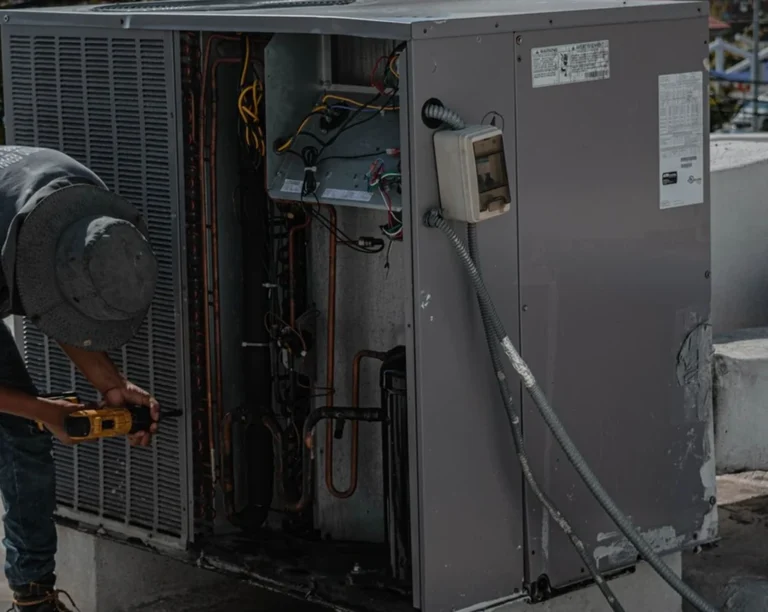
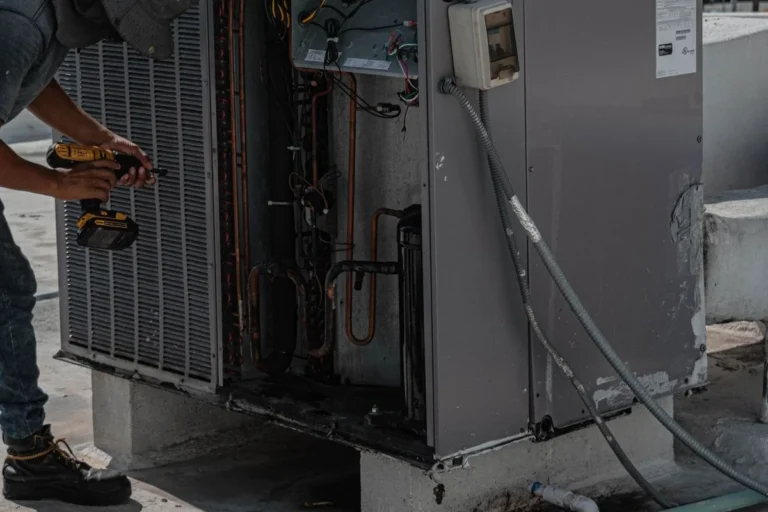
- Gently rinse the outdoor coils. Power OFF at the outdoor disconnect first. Then a soft rinse with a garden hose, top to bottom. Never a pressure washer — it folds the fins.
- Check the insulation on the copper refrigerant lines. The larger line should be wrapped in foam insulation. If it is cracked, crumbling, or missing, replace it — bare line sweats, wastes energy, and drips where it should not.
- Test-run the system on the first warm day. Let it run 20 minutes and confirm cold air at the vents in every room. Finding a problem in April beats finding it in July.
- Schedule a professional tune-up early. Spring slots fill up; a tech catches the things you cannot see — which brings us to the next section.
Do I really need maintenance every single year?
In Mobile, yes — and it is not upselling, it is arithmetic. Your system runs about eight months a year in heat, humidity, and salt air. That is like putting 20,000 miles a year on a car and skipping oil changes. Annual maintenance catches dying capacitors, weak airflow, and drain clogs before they become July emergency calls. The systems that get yearly attention simply last longer and break down less — ask any tech who has pulled a dead capacitor out of a five-year-old neglected unit.
What to Leave to a Technician
Some maintenance genuinely requires training, tools, and certification. Do not DIY these:
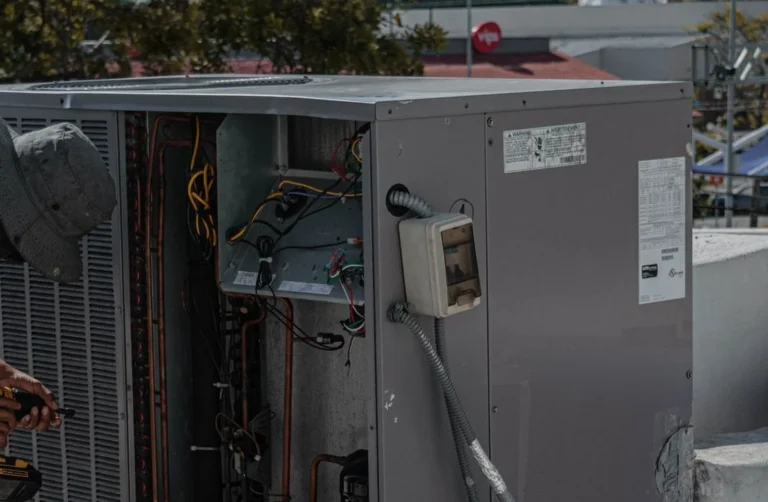
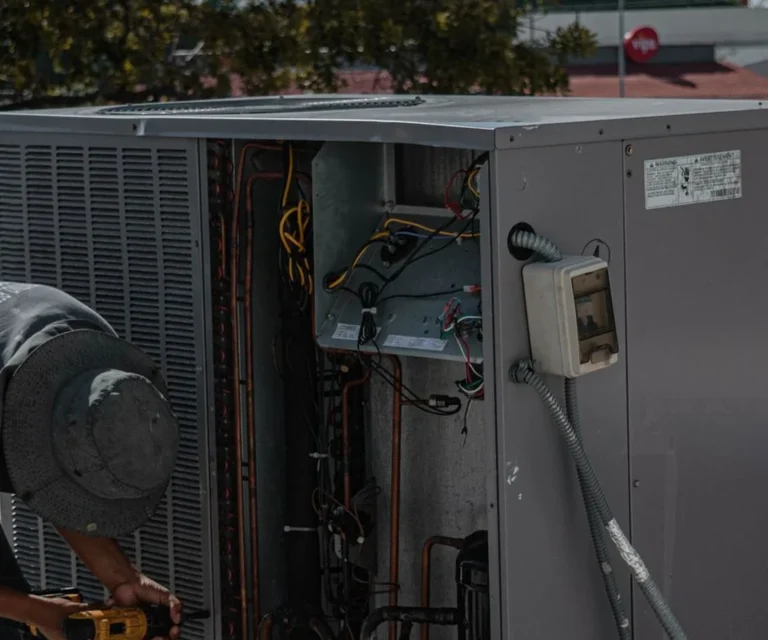
- Electrical testing — capacitors, contactors, and wiring. Capacitors store a charge that can shock you even with the power off. Testing them is a meter-and-training job.
- Refrigerant levels — federal law requires EPA certification to handle refrigerant, and “a little low” versus “leaking” takes gauges and experience to tell apart.
- Deep coil cleaning — the indoor evaporator coil needs proper chemicals and technique; bend those fins and you have made things worse.
- Duct inspection — a tech can spot disconnected or leaking ducts in the attic that are silently dumping your cold air (and money) overhead.
A professional AC maintenance visit covers all of this plus the full safety and performance check — it is the other half of this checklist, the half with the meters.
Will maintenance actually lower my power bills?
A clean system with good airflow does not have to work as hard to cool your home, and equipment that is not straining uses less electricity than equipment fighting clogged coils and packed filters. The honest framing: maintenance protects you from the increases — the slow efficiency bleed of a dirty system and the giant bill spike of a breakdown. Anyone promising you an exact percentage of savings is selling, not informing.
Fall: Light Duty (15 Minutes)
Mobile barely has a winter, but the shoulder season still deserves a pass:
- Clear fall leaves and debris from around the outdoor unit — they mat down over winter and choke spring airflow.
- Do a post-storm check after any big fall weather: disconnect seated, no new dents or debris in the fan, breaker fine.
- Keep checking the filter. Warm fall days still run the system, and holiday cooking plus closed-up houses load filters faster.
- Note anything odd for spring. A noise that started in October is a March tune-up note, not a forgotten problem.
That is the whole homeowner half. It is not glamorous — filters, hoses, and listening — but it is the difference between a system that dies at year 8 and one still going strong past year 12. Most “AC runs but won’t cool” calls we run trace back to something on this list that got skipped.
Frequently Asked Questions
What month should I get my AC serviced in Mobile?
March or early April — before the cooling season ramps up. You get first pick of appointments, and any issues get fixed before the system faces real heat.
Can I do AC maintenance myself?
The homeowner half, absolutely: filters, clearing debris, gentle coil rinses, drain-line flushes, and listening for changes. The technical half — electrical testing, refrigerant, deep cleaning — belongs to a trained technician with the right tools.
How often should I pour vinegar in the drain line?
Once a month during cooling season. A cup of plain white vinegar in the drain line’s access opening discourages the algae growth that causes most drain clogs. Skip harsh chemical drain cleaners — they can damage the pan and coil.
Does maintenance really prevent breakdowns?
It prevents the preventable ones — which are most of them. Dead capacitors, clogged drains, frozen coils from packed filters: all cheap to catch early, all expensive at 9pm in July. No maintenance can stop every failure, but it stops the common ones.