Mold in Your AC Ducts: Signs and What To Do (Mobile, AL)
Mold in Your AC Ducts: Signs and What To Do (Mobile, AL)
That musty smell every time the AC kicks on is not “just how old houses smell.” Here is where it comes from, what we fix, and when you need a specialist.
📞 +1 (251) 205-8786The AC kicks on, and a damp, musty smell rolls out of every vent in the house — like an old basement, every single time the system runs.
In Mobile, this is almost a rite of homeownership. Our cooling season runs March through October, July humidity hangs around 74%, and an air conditioner is a machine that makes cold, wet surfaces inside a dark box. That is exactly where mold likes to grow. No scare tactics here: mold in and around an AC system is common, it is fixable, and the first step is knowing which part of the problem belongs to your AC — and which part belongs to a duct specialist.
The Signs to Look For
1. A musty, earthy smell when the system runs
The smell is strongest in the first minutes after the AC starts and fades as it runs — because the growth is sitting in or near the air stream, and startup blows the accumulated air out first. If the smell only shows up with the AC (or heat) running, the system and ducts are where to look, not the walls.
2. Visible growth around vents and registers
Dark or fuzzy spots around supply vents, on the register itself, or on the ceiling right at the vent edge. Check the bathroom and hallway vents first — humidity lingers there longest.
3. Growth or grime inside the air handler area
If you can see the indoor unit, look for dark buildup on the coil, in the drain pan, or on nearby insulation. A slimy drain pan is one of the most common breeding spots in a Gulf Coast home.
4. Air that feels stuffy and clammy even when it is cool
The house reaches temperature but still feels damp and heavy. That is a humidity problem — and an AC that is not removing moisture properly is also creating the wet conditions mold needs.
Where exactly is the mold growing — in the AC or in the ducts?
Often both, but it usually starts at the equipment. The evaporator coil and drain pan are wet every hour the system runs, so growth begins there and spores ride the air stream into the ducts. That is why the order matters: fix the wet equipment side first, then clean the ducts. Cleaning ducts while a clogged drain keeps the coil soaking wet just buys you a few months before it comes back.
The AC-Side Causes (This Is What We Fix)
- Clogged condensate drain: the drain line carries away gallons of condensation. When algae and slime clog it, water backs up into the pan and sits — a permanent puddle inside your system. Drain clearing runs $100–$200 and is often the single biggest fix. (Standing water from a clogged drain is also what causes the leaks in our post on AC leaking water inside the house.)
- Dirty evaporator coil: a coil coated in grime stays wet longer, cools worse, and gives growth a surface to live on. Coil cleaning is part of regular maintenance, not an upsell.
- Oversized system short-cycling: a too-big AC blasts the house to temperature in minutes and shuts off — never running long enough to pull moisture out of the air. The house stays humid, and humidity is the whole problem.
- High indoor humidity generally: if indoor air never dries out, every cool surface in the system and ducts stays in the danger zone. Sometimes the fix is repair; sometimes it is run-time and airflow adjustments.
What We Fix vs. When You Need a Duct Specialist
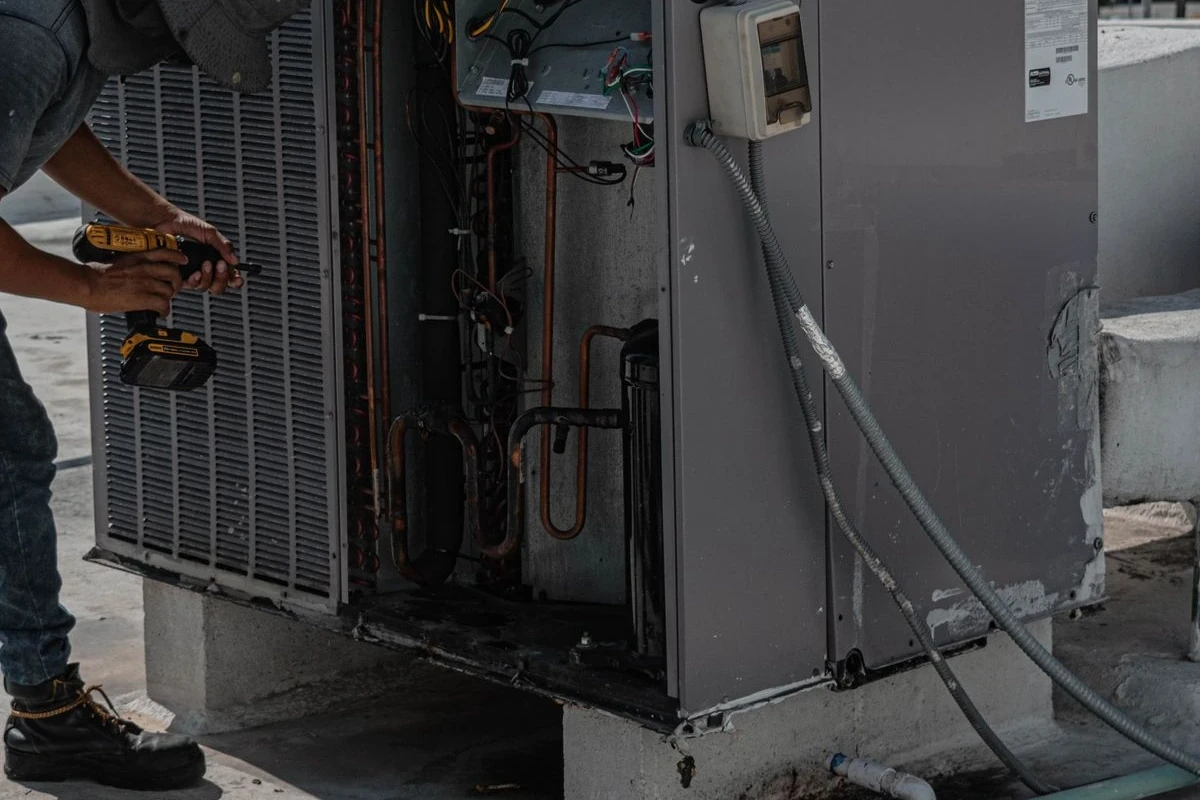
Straight talk on scope: we repair and maintain the AC equipment — the coil, the drain line and pan, airflow, and the system behaviors that keep things wet. Clearing a clogged drain, cleaning a dirty coil, and correcting short-cycling remove the moisture source that feeds growth.
If growth has spread through the ductwork itself, or there is a lot of it, that is a job for a duct-cleaning or remediation specialist — they have the brushes, vacuums, and containment gear for working inside ducts, and that is not a service we pretend to offer. Our honest advice: fix the equipment side with us first so the moisture source is gone, then have the ducts cleaned once. Doing it in the other order usually means paying for the cleaning twice.
Prevention is the boring, reliable part: a yearly tune-up ($100–$200) includes the drain flush and coil check that stop most of this before it starts. Our AC maintenance page lays out what a proper visit covers.
Can I just spray something in the vents to kill it?
Sprays treat the few inches you can reach and none of the coil, pan, or duct interior where the growth actually lives — and they do nothing about the standing water causing it. Skip the spray aisle. Find the moisture source, fix it, and clean what is actually dirty.
Frequently Asked Questions
How do I know if there is mold in my AC ducts?
The main signs are a musty smell that appears when the system runs, visible dark growth around vents and registers, slime or buildup in the drain pan, and indoor air that feels clammy even at temperature. A technician can confirm where the growth is concentrated.
What causes mold to grow in AC systems in Mobile?
Moisture plus time. Clogged condensate drains leave standing water, dirty coils stay wet, and oversized systems short-cycle without removing humidity. Mobile’s long March-through-October cooling season and high humidity give growth months of perfect conditions.
Do you clean ducts, or should I hire a specialist?
We fix the equipment side — drains, coils, airflow, and the system problems that keep things wet. Growth spread through the ductwork itself is a job for a duct-cleaning or remediation specialist. Fix the moisture source first, then clean the ducts once.
How much does it cost to fix the AC-side causes of mold?
Clearing a clogged condensate drain runs $100-$200, and a full tune-up with a drain flush and coil check runs $100-$200. A diagnostic visit to find the moisture source runs $100-$200, with one flat price quoted before any repair work starts.