AC Not Working After a Hurricane? (Mobile, AL Guide)
AC Not Working After a Hurricane? (Mobile, AL Guide)
Atlantic hurricane season runs through November 30. Here is what storms do to ACs, what is safe to check, and when to call.
📞 +1 (251) 205-8786The storm has passed, the power is back on, and every light in the house works — except the air conditioner just sits there, silent, while the temperature climbs.
If you live on the Gulf Coast, this scenario is practically a seasonal tradition. Hurricane season runs through November 30, and ACs are among the most common storm casualties in Mobile: power surges fry their electronics, debris beats up the outdoor unit, and floodwater ruins what it touches. The good news: most post-storm AC failures are diagnosable and fixable — if you approach them in the right order, starting with safety.
Safety First — Read This Before Touching Anything
Storms and electricity are a dangerous combination. Follow these rules with zero exceptions:
- If the outdoor unit sat in floodwater, DO NOT turn it on. Not to “see if it works.” Water damages electrical components in ways you cannot see, and energizing a flooded unit can cause shorts, fires, or shock. It needs a professional inspection first.
- Turn the breaker OFF for the AC at your electrical panel until the unit has been checked, if there was any flooding or visible damage.
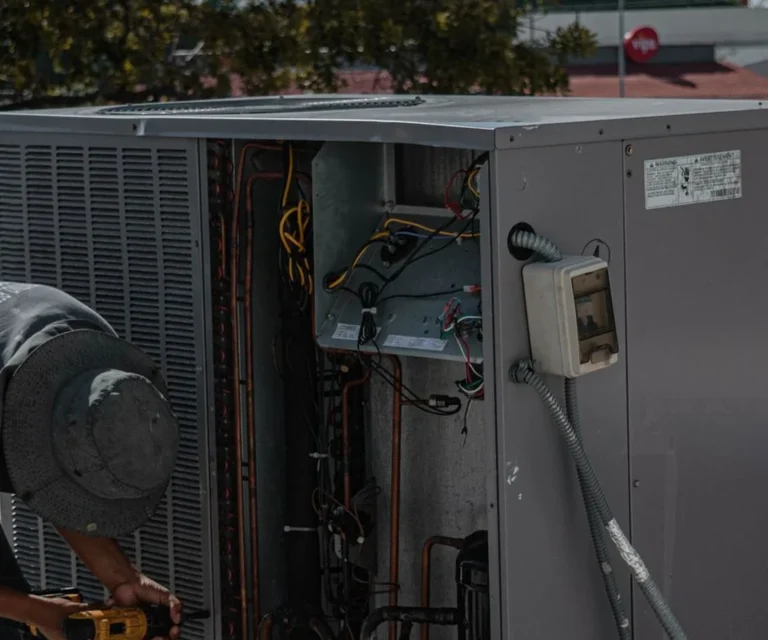
- Do not open any electrical panels or remove unit covers. Capacitors store a charge that can shock you with the power off, and storm damage can leave wiring exposed.
- Watch for standing water around the unit — water and electricity do not mix, and wet ground near a damaged unit is not a place to stand barefoot.
- When in doubt, call. There is no post-storm AC problem worth an injury. A tech with meters and training sorts this out safely in one visit.
My outdoor unit was underwater — can I just turn it back on once it dries?
No — and this is the mistake that turns a repairable unit into a destroyed one. Floodwater leaves silt and corrosion inside electrical components, and “looks dry” is not the same as “is safe.” A technician needs to inspect the electrical compartment, test components, and verify it is safe to energize. If the water reached the compressor or major wiring, we will tell you straight whether repair or replacement is the honest call.
The 4 Most Common Post-Storm AC Problems
1. Surge-fried electronics
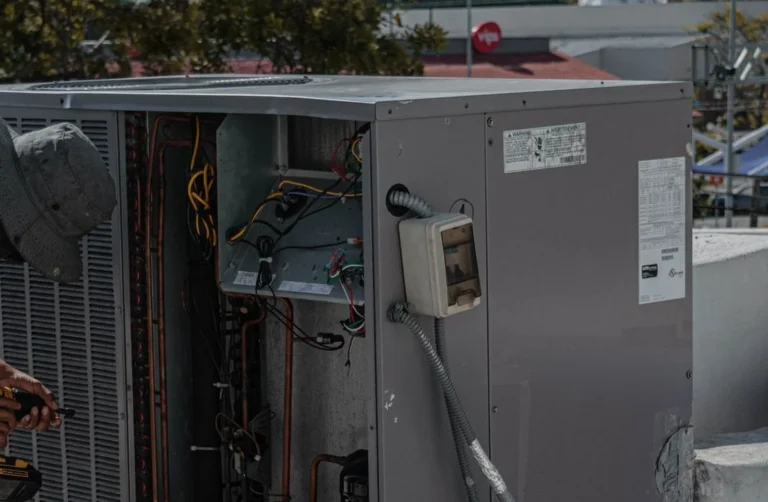
The #1 post-storm failure. Power flickering on and off during a storm sends surges through the system, and the victims are almost always the same: the capacitor and the control board. Symptom: everything was fine before the storm, and now the outdoor unit hums but will not start — or nothing happens at all. Capacitors are a $150–$300 pro repair; control boards cost more, but both are very fixable.
2. Debris damage
Branches, shingles, patio furniture — storms throw all of it at the outdoor unit. Debris bends fan blades, packs coils solid, and dents refrigerant lines. Even if the unit “runs,” a blocked coil cannot reject heat, so cooling collapses. Sometimes the fix is just a thorough cleaning; bent fan blades or crushed fins need a tech.
3. Flooded components
Anything the water touched electrically is suspect: contactors, capacitors, wiring connections, and the compressor’s terminal box. This is the “do not energize” scenario from the safety section — it needs hands-on inspection.
4. Tripped breaker or pulled disconnect
The happy ending: sometimes the storm just tripped the breaker or the outdoor disconnect got bumped. If that is all it is, you will have cold air in minutes — see the safe checks below.

What You Can Safely Check
Only after you have confirmed there was no flooding of the unit and see no visible damage:
- Check the breaker. Find the 240V double breaker for the AC. If tripped, flip fully OFF then ON — once. If it holds and the system starts, you may be done.
- Check the outdoor disconnect. That gray box on the wall near the unit has a pull-out switch. Storms and cleanup crews bump these. Make sure it is fully seated.
- Clear debris — power OFF first. Turn the system off at the thermostat, then pull branches, leaves, and trash out of and around the unit. Do not reach into the fan grille; clear what you can from outside.
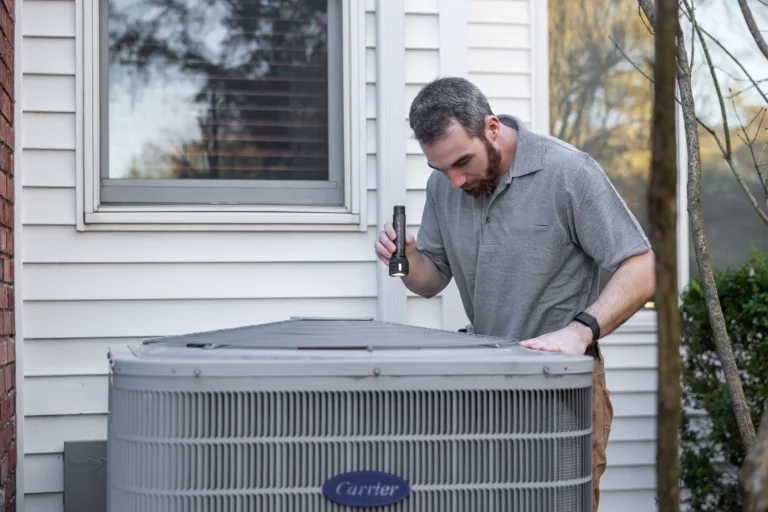
- Look, do not touch. Walk around and look for obviously bent fan blades, crushed coil fins, or dangling wires. If you see damage, stop there and call — that is diagnostic territory, not DIY.
The power is back but the AC won’t start — is it storm damage?
Very likely, yes. When an AC worked before the storm and does nothing after, power surges are the prime suspect — capacitors and control boards are the usual casualties, and both are straightforward for a tech to test. A standard diagnostic ($100–$200) finds the failed part fast. If the system is completely unresponsive after a major storm, do not keep flipping the breaker hoping — get it properly diagnosed through emergency AC repair and stop the guessing.
What a Technician Checks After a Storm
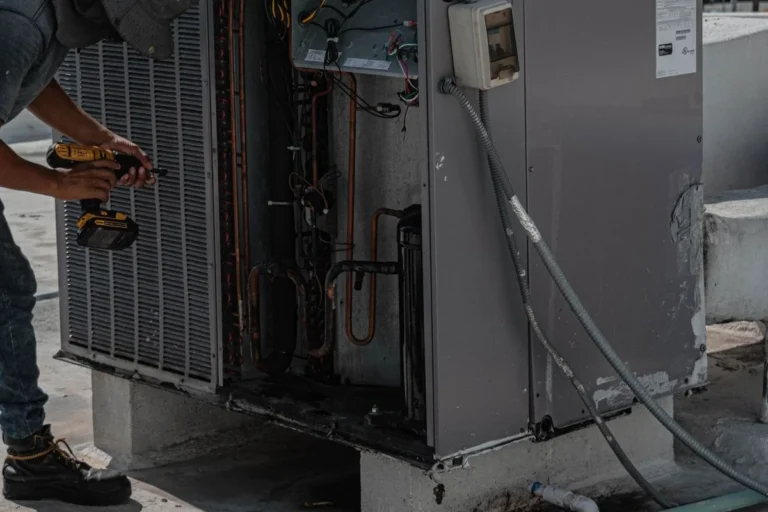
A post-storm diagnostic is methodical — we verify the system is safe before we try to make it run:
- Electrical safety check first — no energizing until wiring, contactors, and connections test safe.
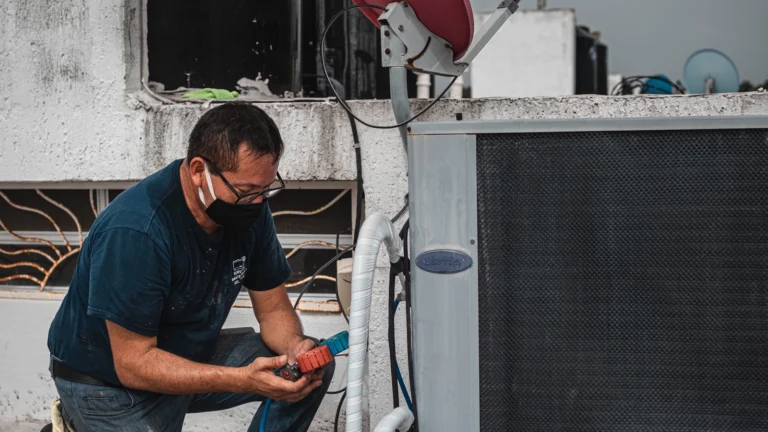
- Capacitor and control board testing — the two most common surge victims, tested with meters in minutes.
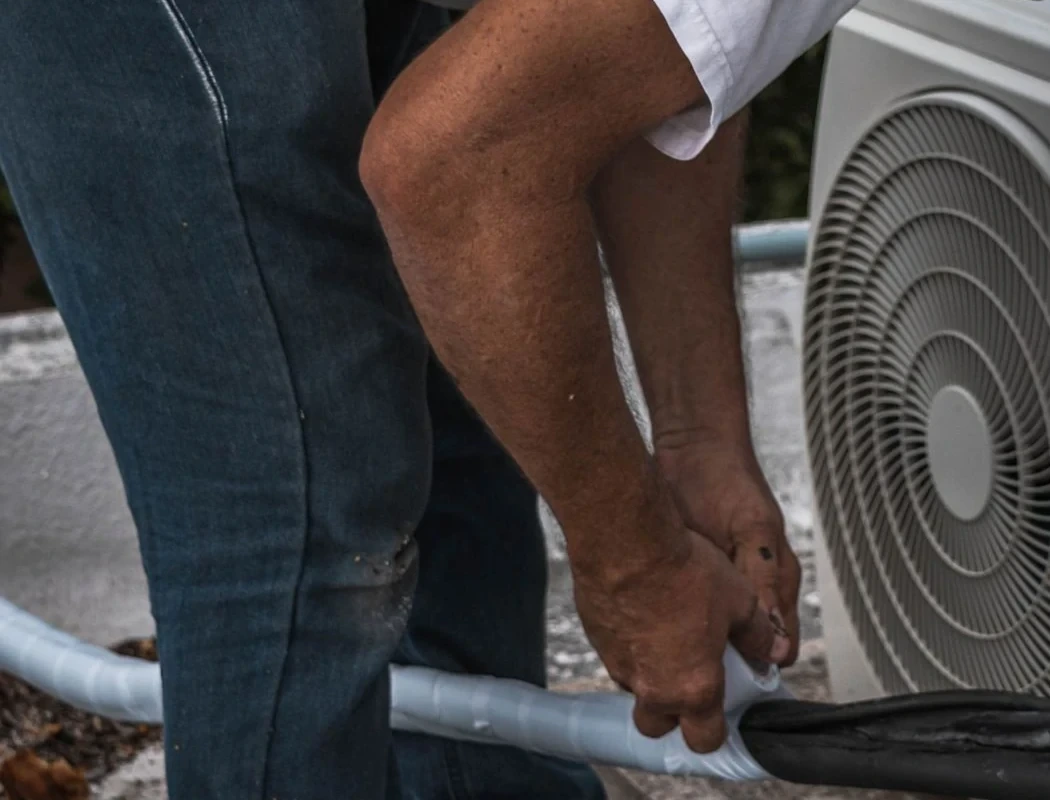
- Refrigerant lines and coils — checked for storm dents, punctures, and crushed fins that restrict heat transfer.
- Full startup and cooling test — once safe, we run the system through a complete cycle and verify real cooling at the vents, not just “it turns on.”
You get one flat written price before any repair begins — the same upfront process as every call.
Should I protect my AC from the next storm?
A surge protector on the AC (or a whole-house unit) is cheap insurance against the #1 post-storm failure — fried capacitors and boards. Beyond that: keep the area around the unit clear before storm season so there is less debris to become projectiles, and after every major storm, do the visual check from the section above before assuming the worst. An ounce of prevention is genuinely worth a pound of $150–$300 capacitors.
When the Unit Is Beyond Repair
Sometimes the honest answer is replacement: a 12+ year old system with a flooded compressor, a crushed coil, and surge-fried electronics is not a repair candidate — it is a new-system conversation. We will show you the repair number and the replacement number side by side so the math makes the decision, not pressure. If it comes to that, our AC installation guide walks through sizing, efficiency, and what the process looks like.
Frequently Asked Questions
Will homeowners insurance cover storm damage to my AC?
Often yes — sudden storm damage (wind, debris, lightning surge) is typically a covered peril, unlike wear and tear. Document the damage with photos before anything is moved or repaired, and get a written diagnosis from the tech for your claim.
How soon after a hurricane should I turn my AC back on?
Once power is stable, do the safety checks above first. If the unit was flooded or shows any damage, keep the breaker off until a technician inspects it. Turning a damaged unit on risks turning a repair into a replacement.
Can a power surge damage my AC even if the lights work fine?
Absolutely — and it happens constantly. Your lights are simple; your AC’s capacitor and control board are sensitive electronics. A surge that does nothing visible to the house can silently kill the parts that start your compressor.
What does a post-storm AC diagnostic cost?
The same as any diagnostic: $100–$200. It covers the full safety check, component testing, and a written upfront price for whatever repair is needed. No work starts without your approval.